 Panacea Bio Chem — Compound Monograph
Antipurinergic Therapy · Rev. 2 · Jul 2026
Panacea Bio Chem — Compound Monograph
Suramin is a synthetic polysulfonated naphthylurea that has been in medicine for a century — a treatment for early-stage African sleeping sickness (trypanosomiasis)1 and river blindness, and a fixture on the WHO Model List of Essential Medicines2. Its large, heavily negatively charged molecule interacts with a wide range of proteins — including the P2 purinergic receptors3 that cells use to read extracellular ATP. That property has made it the reference tool of antipurinergic therapy (APT), an experimental research idea linked to the cell danger response hypothesis4. This page explains the science in plain language and states plainly that APT is early, contested and not an established treatment. Nothing here is medical advice.
[0001] Imagine a drug older than antibiotics that is still on the essential-medicines list, and that scientists keep rediscovering for reasons its inventors never imagined. That is suramin. Chemically it is a big, symmetrical molecule carrying six sulfonate groups, which make it strongly water-soluble and strongly negatively charged. It does not slip easily into cells or across the blood–brain barrier; it is given by slow intravenous injection and lingers in the body for weeks.
[0002] For a hundred years its job was to kill parasites. It clears the trypanosomes of early-stage African sleeping sickness and is used against the worm behind river blindness (onchocerciasis)1. What is new is not the molecule but the question being asked of it: because that dense negative charge lets suramin sit on many signalling proteins at once, researchers now study it as a way to quiet purinergic signalling — the conversation cells hold using ATP outside the cell.
[0003] Suramin was synthesised at Bayer around 1916–1920 by chemists Oskar Dressel, Richard Kothe and Bernhard Heymann, from dye chemistry that grew out of the trypan-red and trypan-blue work of Paul Ehrlich. Bayer marketed it as "Bayer 205" and later "Germanin," and — here is the STORY — kept its exact structure a guarded secret for years, treating the formula as a strategic national asset in the colonial scramble for tropical medicine5.
[0004] The secret did not hold. At the Institut Pasteur in Paris, the chemist Ernest Fourneau and his team reverse-engineered the compound and, in 1924, published their own synthesis — sold as "Fourneau 309" — breaking Bayer's monopoly5. A drug whose recipe two nations fought to keep or crack is, a century later, an off-patent essential medicine anyone can read about. There is a quiet lesson in that for anyone who builds proprietary methods: the science outlives the secrecy — the edge is in doing it, repeatably.
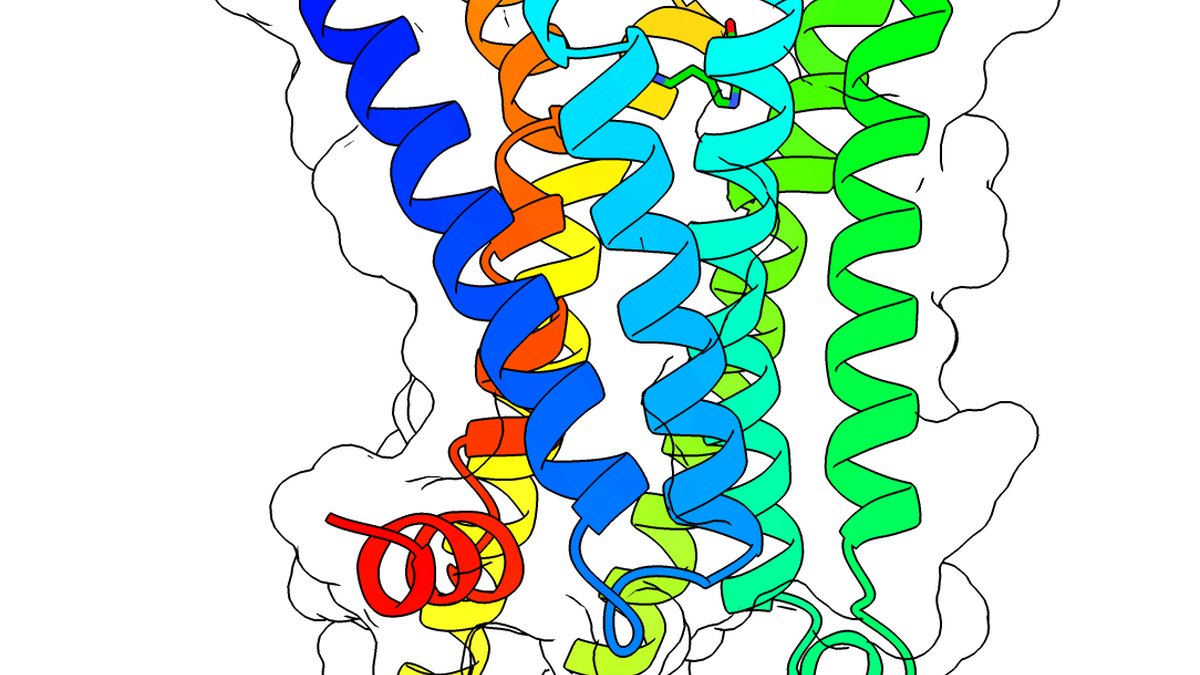
[0005] Inside a cell, ATP is the fuel of life. Outside the cell, ATP means something very different. When a cell is stressed, infected or injured, it leaks or releases ATP into the space around it, where neighbouring cells detect it through purinergic receptors — the P2X ion channels and P2Y G-protein receptors3. Extracellular ATP is, in effect, a chemical flare: a broadcast that says "danger here." This purinergic signalling shapes inflammation, pain, immune activation and how cells route their metabolism.
[0006] The cell danger response (CDR), articulated by Robert Naviaux at UC San Diego, proposes that after a threat some cells fail to switch the alarm off. Persistent extracellular-ATP signalling could keep them in a defensive, low-cooperation state — a plausible common thread the hypothesis links to several chronic conditions4. Antipurinergic therapy is the experimental move that follows: transiently block the ATP signal — with suramin as the classic, broad P2-receptor antagonist — to let the cell stand down and metabolism re-normalise. It is an elegant idea. It is also, at this stage, a hypothesis under test, not a settled mechanism of disease.
[0007] If the cell danger response idea is even partly right, a well-timed antipurinergic pulse would be a genuinely new lever on chronic inflammatory and neurodevelopmental biology — pharmacology aimed at a signalling state rather than a single molecule. The most cited human probe is a small 2017 phase I/II trial from Naviaux's group testing a single low-dose suramin infusion in autism spectrum disorder, which reported transient behavioural changes in a handful of participants6.
[0008] That trial is best read as a proof-of-concept, not a result to build hope on. It was tiny, brief and exploratory. Suramin itself carries real toxicity with repeated dosing — effects on the adrenal glands, nerves, kidneys and clotting are documented from its antiparasitic and 1990s oncology use. And the compound has attracted a fog of online misinformation (pine-needle "sources," self-dosing schemes) that has no scientific basis. This is a topic where the honest scientific posture is curiosity with the brakes on: real mechanism, real questions, and results that are not established for any chronic-disease use.
[0009] Panacea Bio Chem researches the purinergic sphere — the chemistry of extracellular ATP signalling and antipurinergic modulation — as an ongoing programme led by Bogdan Dicoias, the scientist behind the group's proprietary methods. As with its lyophilization and formulation technologies, Panacea's stance here is method-first: the value is in how a fragile, highly charged molecule is handled, characterised and studied.
[0010] The disciplines are adjacent to Panacea's existing work: handling degradation-prone actives is exactly the problem behind RedoxVault — the vault that isolates a molecule from oxidative attack → and OxyDeplete, which strips the oxygen that quietly degrades actives →, while stabilising them as a solid dose is the domain of Cryolapse, the gentle cryogenic freeze-dry → and TgShift, which lifts the glass-transition ceiling →.
[0011] Where might careful purinergic research "hit where it hurts most"? Read as directions for study, not as claims:
[0012] Each of these is a question, offered as inspiration for disciplined research and trials — not a destination reached.
| Chemical class | Synthetic polysulfonated naphthylurea (six sulfonate groups) |
| First synthesised | c. 1916–1920, Bayer (Dressel, Kothe, Heymann); "Bayer 205" / "Germanin" |
| Approved indications | Early-stage African trypanosomiasis; onchocerciasis (river blindness) |
| Route | Slow intravenous infusion (poor cell / blood–brain-barrier entry) |
| Molecular targets | Broad — including P2X / P2Y purinergic receptors, plus many enzymes |
| Research interest | Antipurinergic therapy (APT); cell danger response hypothesis |
| Status of APT use | Experimental — not established for chronic disease |
| Regulatory listing | WHO Model List of Essential Medicines (antiparasitic use) |
What is suramin?
A synthetic polysulfonated naphthylurea made by Bayer
around 1916–1920. For a century it has treated early-stage African sleeping sickness
and river blindness, and it is on the WHO essential-medicines list. Its dense negative charge
also lets it block P2 purinergic receptors, which is why it is now studied as an
antipurinergic agent.
What is antipurinergic therapy?
An experimental research idea in which a drug
like suramin blocks purinergic signalling — the messaging cells do with extracellular
ATP through P2X and P2Y receptors. The cell danger response hypothesis suggests some
cells stay stuck in an ATP-driven alarm state; APT aims to interrupt it. It is research-stage.
Is suramin an approved treatment for autism or chronic disease?
No. Its only
long-standing approved uses are antiparasitic. The antipurinergic work — including a small
2017 autism proof-of-concept trial — is experimental, not established or approved, and
suramin carries real toxicity. "Natural" or self-dosed suramin claims are not supported by
evidence. Nothing here is medical advice.
Recent developments in the field — refreshed 2026-09-07 by Panacea Bio Chem.
The Panacea Technology Universe
Proprietary Panacea Bio Chem Ltd technologies, invented by Bogdan Dicoias — what each one does, and why it leads its class.
 Lyoprester®The only dual-chamber cartridge that is autoreconstitution-enabled, vacuum-sealed and argon-fillback.lyoprester.com ↗
 P-EARLs™Panacea-Engineered Aseptic Reconstitution Liquid(s) — each tuned to the peptide it wakes.p-earls.com ↗
 Peptourbillon™The layered peptide formulation architecture — single- or multi-layer, never a blend.peptourbillon.com ↗
 RF Tunnel™The RF-formed central channel through the cake.rftunnel.com ↗
 TgShift™Raises the cake’s glass-transition temperature with RF — instead of chilling below it.tgshift.com ↗
 Cryolapse™Cryogenic pressure collapse under S3Pulse™ control — vapour redistributed through the whole cake, not its surface, impeding crust formation.cryolapse.com ↗
 LyoLevit™The cake levitates and spins in high orbit — driven by ultrasound and RF.lyolevit.com ↗
 Lyochrysalis™The integrated chamber housing the whole drying stack.lyochrysalis.com ↗
 S3Pulse™The control brain for every piece of Panacea hardware.s3pulse.com ↗
 Liquiprester™The single-liquid cartridge engineered so multiple peptide APIs coexist in one shared vehicle.liquiprester.com ↗
 Syntheseract™Continuous-flow peptide synthesis in a special, very fast and economical way.syntheseract.com ↗
 CFSPPS™Continuous-flow solid-phase peptide synthesis, written as its own category.cfspps.com ↗
 OxyDeplete™Degassing plus no-headspace doctrine — the oxygen-starved seal.oxydeplete.com ↗
 ArgonLock™The final inert-atmosphere lock under argon.argonlock.com ↗
 RedoxVault™Separation, not merely suppression — redox isolation in lipid micro-reservoirs.redoxvault.com ↗
 PleniDose™The shared filling gantry — one machine filling both the dual-chamber Lyoprester and the liquid Liquiprester.plenidose.com ↗
 IncreSure™The dose-metrology layer — verified API per pen increment.incresure.com ↗
 ElimiVoid™Front-void elimination without touching the metered dose.elimivoid.com ↗
 Cryoviscous™The characterised cold, high-viscosity, low-mobility conditioning state.cryoviscous.com ↗
 Vana Machine™Vacuum Assisted Needle Accessory — vacuum conditioning and plunger-locking for the cartridge.
 EZnject™The disposable auto-injector pen built around the Lyoprester.panaceaeznject.com ↗
 Dicoias ΨThe computed-chemistry advisory — every substance reduced to a vector across physical, electronic and formulation space.dcppsi.com ↗
 SealoPrester™Aseptic Cartridge Closure System — Seal o’ Precision + Sterility.sealoprester.com ↗
 Peptidic LiquidThe peptide formulation in solution — the active plus its buffers, cryoprotectants, lyoprotectants and scaffolders.peptidicliquid.com ↗
 DiastolVAC™Biomimetic diastolic vacuum control — the pneumatic circulatory system of the machine: pumps, valves and sensors as one ensemble.diastolvac.com ↗
Publications indexed in PubMed in the last 30 days for "Suramin" OR "antipurinergic therapy" — refreshed weekly.